
Prototyping
Prototyping
Engineering support shaped around the application.
Prototyping
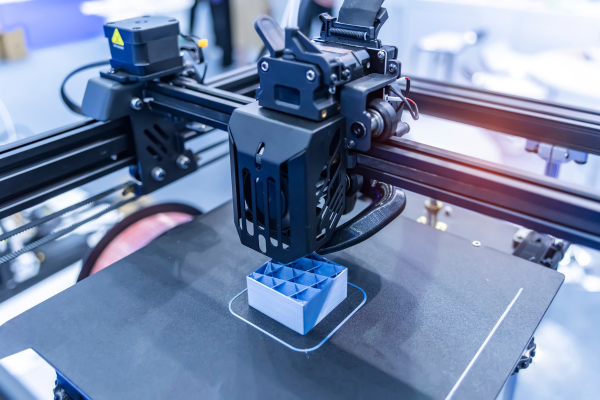
Anjiom Technologies provides professional prototyping services that transform engineering concepts and digital designs into functional physical models for testing, evaluation, and design validation. We develop prototypes for mechanical components, assemblies, machinery, and industrial products to assess their real-world functionality before moving into full-scale production.
Our prototyping process helps verify critical design aspects such as dimensional accuracy, fit, assembly, usability, functionality, and performance. By creating physical representations at an early stage, we enable clients to evaluate designs in practical conditions and identify potential issues before significant manufacturing investment.
Through iterative testing, evaluation, and design refinement, Anjiom Technologies helps improve product quality, reduce development risks, and optimize manufacturability. Our approach supports a faster and more controlled transition from concept and engineering design to a reliable production-ready solution.
Key Capabilities
- Functional Prototyping – Developing physical prototypes to evaluate product functionality, operation, and overall design performance.
- Mechanical Component Prototypes – Creating prototypes of individual components and parts for dimensional and functional validation.
- Assembly Prototyping – Building prototype assemblies to verify component fit, alignment, integration, and assembly processes.
- Design Verification & Testing – Evaluating prototypes for accuracy, usability, performance, and potential design issues.
- Iterative Design Refinement – Using prototype feedback and test results to improve designs and resolve engineering challenges.
- Pre-Production Validation – Supporting final design validation and manufacturability assessment before full-scale production.
Engineering without noise.
We focus on the decisions that matter: performance, manufacturability, reliability, clarity and speed of development.
Precision
Design intent must be clear, measurable and technically defensible.
Practicality
A beautiful design has to survive real materials, processes, tolerances and cost constraints.
Collaboration
Engineering works better when designers, engineers, manufacturers and clients share the same picture.
Continuous improvement
Every design review is an opportunity to remove complexity, improve performance and reduce risk.